
Galoshes Part III
Memories of a peripatetic childhood

The City of Brotherly Love
Our cross country Odyssey began when we boarded the train at Union Station in Los Angeles. This was the old Santa Fe line, before Amtrak took over, and there was still a bit of romance left to the rails. The train was clean and the dining car was spotless with immaculate white table clothes and silverware. The food was better than good and we eagerly awaited our next visit to the diner throughout the trip.
We passed the time reading, talking or just gazing out the window at the passing scenery of desert, mountains and plains, small towns and large cities. It was a long but pleasant enough 3-day train journey from L.A. to Chicago.
When boredom set in, I wandered off to the men’s bathroom - I believe it was called the men’s lounge - where I seem to recall when you flushed the toilet you could see the tracks below the train racing past and hear the clacking of the wheels on the rails.
There always seemed to be somebody sitting on the couch in the men’s room, an off-duty porter, or traveling salesman type or an old guy just wanting to get away from sitting next to the wife. They read newspapers or wanted to talk, even to a kid.
There were some moments of melancholia. When someone on a front porch would wave to the train, I would wonder who they were and what their lives were like. Or when the train stopped in a little town late a night and luggage was thumped about and voices muttered in the darkness. A peek out the window from our darkened Pullman sleeper would reveal a ghostly abandoned train station, a scary place at 3 or 4 in the morning. And the farther we got from California, the more it sunk in that we had left our lives there behind and who knew what waited for us ahead?
But then the adventure of it all would return when dawn revealed an massive gorge between red buttes or an immense expanse of golden prairie. There would be french toast in the dining car with orange juice that tasted a lot better than the stuff we made at home from the frozen round carton.
When we finally pulled in at Union Station in Chicago we piled out onto the platform, mom and dad yelling at us to settle down! Come back here! Watch your little brother! Watch your little sister while we get the baggage! One of us kids spotted a pile of filthy crusted frosted white stuff piled beside the platform. Snow! We were on top of it in a second, stomping it with our feet and clawing at it with our bare hands in a futile attempt to break it into suitable material for snowballs.
Passersby must have thought we were a demented lot, frolicking ecstatic in grimy slush. But we seldom had seen snow, the last time being when someone in our neighborhood in San Pedro returned from a weekend in Lake Arrowhead and produced a plastic bag full of the melting stuff, which we kids futilely attempted to fashion into snowballs.
Galoshes
After a quick visit with my dad’s mom Mary, a crusty old soul who still spoke with an Irish brogue, mom and we kids were promptly dispatched to Peoria. Dad stayed in Chicago for several days to visit with mom and his brother, my Uncle Jim, and, this remained unstated but understood nonetheless, have a drunk with his old pals.
We got reacquainted with grandma in Peoria and then my mother busied herself with the crucial task of outfitting me, my brothers and my sister for winter, as we had no clothes for that season since it didn’t really exist in Southern California.
We were taken to the store and I was outfitted in a gray jacket with a large zipper that my mother made sure was way too big on me so I could “grow into it.” This coat had a multicolored collar of some scratchy material that insulated my neck like a limp sock. Then she insisted that I try on galoshes, clunky black rubber boots with a slew of buckles and clips, and again she made sure they were too big so I could “grow into them.”
She bought us corduroy pants and flannel shirts and big floppy mittens. The matching of colors was dispensed with given the urgency of the situation with the temperature already frigid and the burden on my mother of having to do all this shopping for four kids with no help from the absent husband.
In California, my usual outfit had consisted of white t-shirt, faded blue jeans and sneakers, so my sense of fashion was understandably limited. In this new winter get-up I felt absolutely smothered by layers of vulcanized outerwear.
But my mother was not yet finished. I had to have suitable head gear. Mom settled on one of those fur and leather deals that Minnesota state troopers wear, with a vertical brim of fur snapped to the forehead and fluffy ear flaps that are strapped overhead when not lowered over the frostbitten lobes.
As I have a large head, there was a limited selection of colors and I ended up with red - a fire-engine red that seemed to make the top of my head glow like a fire hydrant covered with fluorescent paint.
Now that we were ready for the worst that old man winter could serve up, we settled in at grandma’s to wait for the old man to show up to retrieve us so we could resume the journey to the East Coast. I remember watching a lot of television, which was turned on even when other relatives came over to see my mom and her brood. One evening the Ed Sullivan Show was on and my great uncle Homer, a good-natured old coot with rheumy eyes and a cigarette surgically attached to his hand, was ogling some dancing girls on the tube. Homer’s wife Dorothy - my mom’s Aunt Dot - scolded him for his harmless lechery as she cackled and lit a cigarette for herself.
Someone mentioned that maybe those long-haired fairies The Beatles would be on the show again tonight and weren’t they a sight. And wasn’t rock music - if you want to call it music - wasn’t it just dreadful and those outfits they wore and the teenage girls all screaming, and what was the world coming to when men could dress like that and grow their hair long and shake it around like a bunch of - well I won’t say it in front of the children - and they shout into the microphones so that you can’t make out what they’re singing - if you can call that singing - and on Ed Sullivan for kids to see and ...
Suddenly I was all ears. I had listened to a good deal of pop music in California, the Beach Boys and whatever else could be picked up on those new little AM transistor radios that everyone was buying. But I had never heard of The Beatles.
What else had I missed by being on the train for so many days and being stuck shopping in stores with my mother and younger siblings and being completely out of touch with my peers? The image of screaming teenage girls and long-haired English blokes plucking electric guitars, all of it so wild and shocking that it horrified the older generation, this had instant appeal to me. So now I watched the Ed Sullivan Show with renewed interest, eagerly awaiting my first glimpse of The Beatles. But they weren’t on that night and I didn’t hear about them again until I arrived in Philadelphia, where by then they were on every radio station and juke box in the land.
Eventually my dad made his appearance and we returned to Chicago and got back on the train - the Pennsylvania Railroad this time - and our journey resumed. The train - the “Pennsy” they called it - was not as nice as the Santa Fe. It was old, dank and dirty. (I didn’t know it but passenger rail lines in those days were on the brink of bankruptcy as everyone - not us apparently - went everywhere by car instead of train. The bankrupt operators would be conglomerated into what we now call Amtrak.) The landscape visible from the train windows was different now too - more industrial and seemingly cluttered with rusted heaps of stuff, corrugated metal and junk cars and now the sky was overcast a lot of the time and gray. Everything seemed more gray and brown, even the houses and the buildings. The people were starting to sport a pallor as well.
I was getting apprehensive now. Where was the old man taking us?
After a long day and overnight on the train, we pulled into Philadelphia, where winter was now despotically in control and the gloom was pervasive. The snow was dirty and the cars were grungy with crusted road salt. The streets were old and cracked, and there was more trash in the gutters than I had seen in L.A. People didn’t seem very friendly either, in fact they were kind of mean, and they had funny accents and when you spoke to them they thought you were the one with an accent.
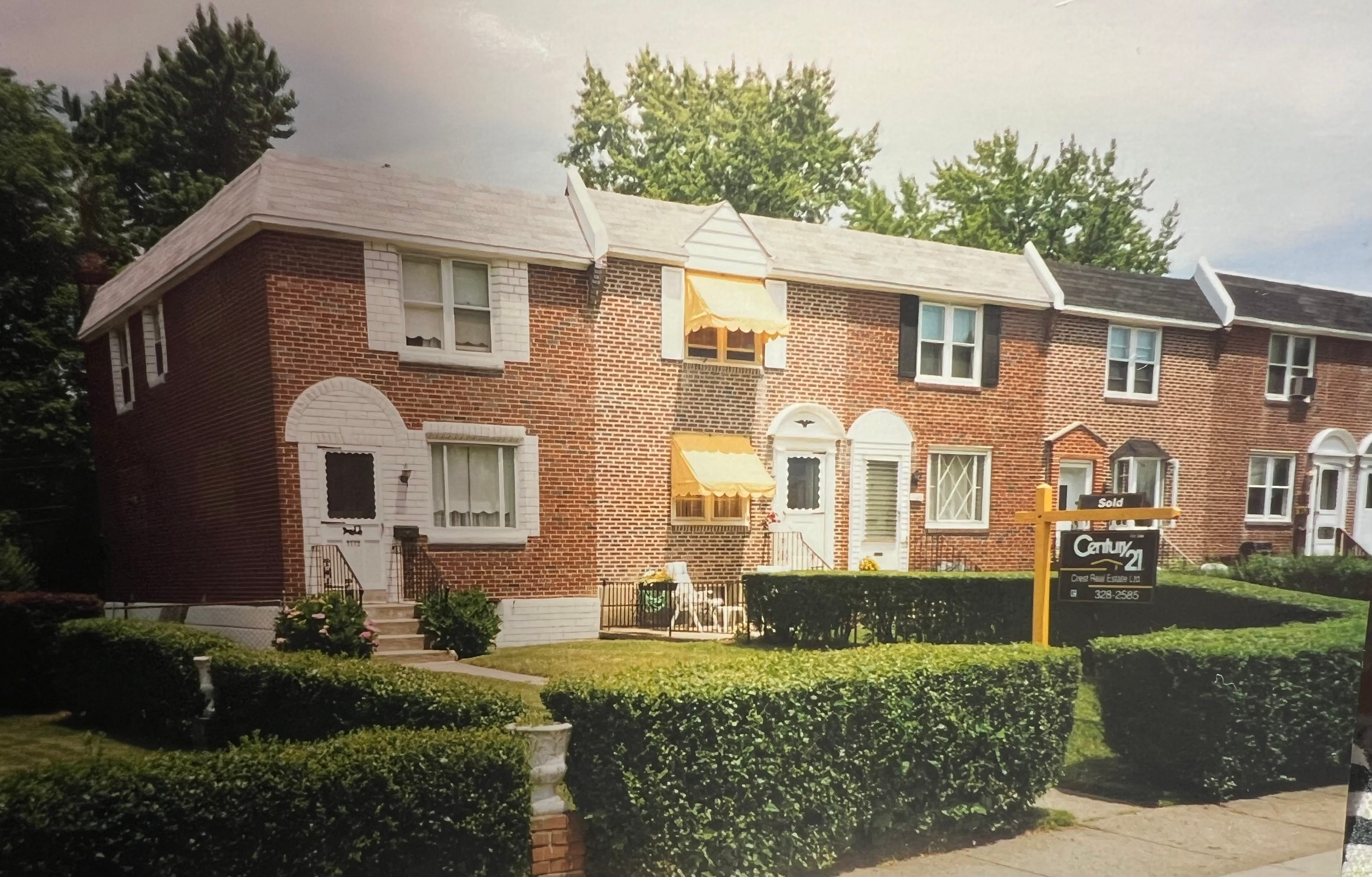
When we finally arrived at our rented home, after traveling 3,000 miles to get there, we pulled up in front of a drab brick row house fronted by a frozen lawn of dead brown grass.
I looked at our new home and I looked over at my dad. I didn’t dare express disapproval or start complaining but he could see disappointment in the glum expression on my face. His own face took on a ‘what’s your problem?’ scowl. I turned away.
I wanted to go back to California, to blue albeit smoggy skies and sun baked pastel colored stucco homes and suntanned people and bright shiny clean cars barreling down the ice-free highways. I would go back, eventually.
Eventually I also would make good friends in suburban Philly and nowadays I pretty much jump at a chance to visit the city. I think the people there - though they still have an accent - are great. But back in 1964 I was the new kid in a strange new neighborhood going to a new school where not everybody was welcoming to a kid from a far away place who didn’t dress or talk like them.
Our Lady of Fatima
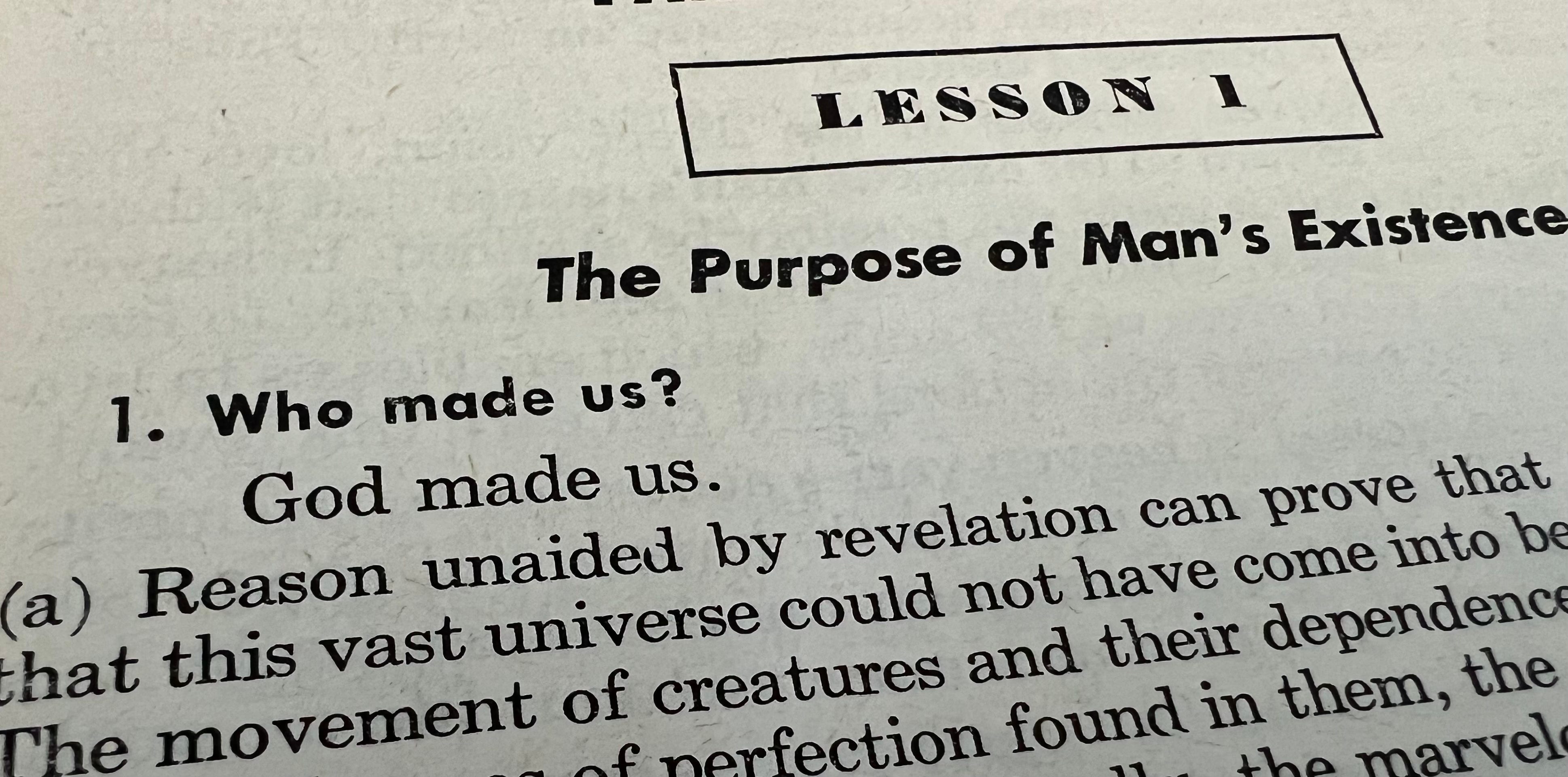
I had already missed some school due to our cross-country move so I was immediately outfitted in my new winter ensemble and, along with my two brothers, transported to the local Catholic School, Our Lady of Fatima.
We didn’t know it at the time, but we were to be inmates at this institution for the next fours years. Had I understood this fact and its implications on that first day, I would have quickly progressed from being merely apprehensive to a dangerously depressed mental state.
The school facilities were modern enough, but beneath this facade was a place that at times could be every bit as Gothic as the darker parts of the middle ages.
We were introduced to the Mother Superior, a tight-lipped skeleton of a female whose flinty-eyes regarded you with all the warmth of a predatory bird. She and the other nuns were from the Immaculate Heart of Mary, an order regaled in full habits of elaborate blue vestments and stiff white head gear that included side blinders and covered every inch of the saintly skull except for the pale visage. These outfits were accessorized with a huge rosary worn like a belt around the waist, with a great brass crucifix drooping down. We would later learn that this blessed relic, in the pious hands of an enraged member of this most sacred order of holy women, could be brandished as a terrifying weapon.
Mother superior explained to us that we would all enjoy our time at Our Lady of Fatima provided we behaved like good little Catholics and did what we were told, when were told, but if we did not, well, we would have to suffer the consequences. During this speech her bony fingers receded into the long blue sleeves of her habit, her face tilted towards us like a raised hatchet, and my brother Tim looked like he was about to make a break for the door.
I was then separated from my siblings, who were dragged off to their own fates, and Mother Superior herself escorted me to the fourth grade classroom of Sister Bartholomew. I followed behind as she moved through the deserted hallways like a specter floating on air. Her hard black heels seemed to make no sound at all.
A light tapping on a heavy wooden portal with the bony knuckle brought a boy in navy blue tie and blazer to the door. I was instructed to enter. Seated in the classroom were about 60 students, blazer-clad boys in front and girls in blue skirt uniforms assembled in back. These were the peak baby boom years and every class at Fatima had at least this many students, which also required that the place be overseen like a stalag in order to maintain discipline.
All these eyes watched as I shuffled in, the buckles on my new galoshes making a muffled rattling noise, somewhat like leg irons. Mother Superior also entered and addressed a short pudgy-faced nun who stood in front of the classroom.
Sister Bartholomew, this is Gavin Murphy. His family has just moved here from California and he’s joining your class today.
The nun focused quizzical eyes on me through wire-rimmed eyeglasses and said: We’re glad to have you Kevin, aren’t we boys and girls?
The class in unison uttered a perfunctory ‘Yes Sister’ but the sea of malevolent stares sent me a very different message. I stood before them in my oversized gray winter coat and bright red hat, beneath which my hair was buzz cut in what had been the fashion in California. I stared out at the boys and their lacquered pompadours and suddenly my ears felt very large.
Sister Bartholomew instructed me to remove my burden of winter garb and take a seat. I was shown to a wooden desk with black iron legs attached with other desks to split wood rails on the floor. A hard bench attached to the front of the desk behind provided a seat.
I sat down at one of these old desks, complete with empty obsolete inkwell (though we would be required to use fountain pens), and for a moment wondered if I hadn’t been transferred back to Victorian times, not that I knew what Victorian met. No one in the vicinity seemed to acknowledge my presence until a few minutes later, when Sister Bartholomew turned to the board, and someone tossed a folded note on my desk. I stared at it for a moment, then apprehensively opened it. Scrawled on the piece of paper were the words:
Go Home F**got!
I had never heard or seen the f**got word before but I knew it wasn’t good. ( I was to find out that these good Catholic children knew words I had never heard before and wasn’t supposed to utter, certainly not as a child.) There was some malicious giggling and then over the course of the day some whispered threats about what was going to happen to me after school. Ooooh shit, I thought, this is really bad.
When classes finally ended that first day I put on my ridiculously uncool winter clothing ensemble and watched as the other boys wrapped themselves in pea coats and black leather jackets. Some wore pointy shoes that I later learned were known as rat stabbers or fence climbers usually associated disparagingly with a particular ethnic group. These junior greasers snickered at my galoshes and pointed at my hat and generally were having a really good laugh at my great expense. I cursed my parents for exposing me to the world in such ridiculous clothing and for bringing me to this awful place, this miserable school and thrusting me among these malicious little bastards who were now saying stuff like Yo! Nicky! and who pronounced water like wuter.
We were then marched out of the classroom and down the hallway in twos and remained in formation as we crossed the school parking lot, passed the convent and the rectory and descended a hill. We still remained in twos as we walked onto a pedestrian bridge that crossed a creek and then up a hill to the edge of the neighborhood of row houses, most better maintained than our rental and more welcoming, where we finally were allowed to disperse. During this whole forced march the nuns and appointed students policed the line and enforced silence. But this didn’t stop the whispered threats coming my way and when we finally broke ranks I nervously waited, as I had been instructed, for my brothers to join me, then I fled for home, trying to remember the directions my father had given to find the house.
There was no use complaining to my parents about my treatment at the hands of the little Catholic thugs at Fatima. My dad would just say that I needed to defend myself and couldn’t come running home with tail between my legs every time some bully made fun of me or even threatened me. He would recall his own fighting prowess and how he had to be tough when he was a kid back in Chicago.
So the next day was no different. I was the “new kid” and not only was I a new kid, I was a strange new kid from a far away place. That afternoon when school ended, two of the surliest punks in the class were behind me in line, whispering threats and telling me they were going to get me when we got out of line. They kept stepping on the heels of my shoes, as I now refused to wear my galoshes.
By the time we got to the top of the hill and the line dispersed, I was scared and I walked as fast as I could to get away from these guys without actually running. But they followed me and grabbed me from behind. That’s when I lost it.
My dad over the years had provided me with some basic boxing lessons, usually after he had a few beers and decided it was time to spend some quality time with his oldest son who, as a boy, needed pugilistic instruction. So I knew the basics of the jab, the right cross, the stance and some leg work. Also, as I mentioned before, I was such good friends with one of the lads back in San Pedro that we regularly tried to batter one another in order for one of us to maintain social dominance, so I had hit and been hit before.
Basically I’m a reserved, non-violent sort, but once I lose my temper I also lose most of the fear. This was the situation now. I wheeled around, assumed the stance, and sent two jabs into the startled mug of one of my pursuers. After sending him into retreat, I taunted both of them to try and take me. They fled, running away like the cowards they were. I shouted after them that if they messed with me again I was going to beat the crap out of them both.
This defiant display of violent ability was noted by others at the scene and after that, most of the harassment and threats subsided. Of course, the fists would be called on to do their duty again from time to time, but most bullies don’t mess with you when they know you will fight back. It was sad, but true, especially in those days - you had to fight to have peace, even with kids you considered friends. I was still a long way from being accepted and certainly nowhere near being a cool kid. Taking down a couple of bullies had boosted my confidence but my new peers could still sense fear.
This neighborhood was in Darby Township, a near suburb of Philly. The mailing address was Glenolden, but it was actually closer to Secane, where my dad caught the train into the city, about a 15-minute ride.
It was a white largely working-class enclave, mostly Italian and Irish with some Poles and Germans. Later I was informed there was one Jew on the block, but for the most part everyone was Catholic.
It seemed like there were three or four kids packed into every row house in this neighborhood. These houses were maybe 15 or 20 years old when we arrived in 1964. They were two story affairs with a living room, dining room and kitchen on the first floor. Each had three bedrooms on the second floor but only one bathroom. There was a basement and a single-car garage built into the ground floor, opening onto an alley behind the house. There were five or six of these units per row and there were lots of rows on miles of streets. Most residents in the neighborhood took a lot of pride in their modest homes.
Just about no one in this neighborhood sent their kids to the public schools, which were mostly attended by black kids in other neighborhoods. For the first time in my life I became aware of racial segregation. We whites didn’t go to the black neighborhoods and they didn’t come to our neighborhood.
These factors, combined with the demographics of the Baby Boom, explained why the classrooms at Our Lady of Fatima were bursting at the seams. There were literally 90 or 100 kids per class in the lower grades, and 70 or so in the upper grades. If large classes really are a detriment to learning, and I think they are, it’s a wonder myself and my brothers can spell our names, let alone add two and two.
Some classes were held in the basement of the church. I would have the pleasure of attending sixth grade in this basement, where Masses also were held on Sunday to accommodate the overflow from upstairs. The only natural light in this dungeon came through the grates above narrow basement windows, and threw off a silhouette that appropriately resembled prison bars.
All was not gloom and doom though. I was making friends in the neighborhood and as I said before, the “British Invasion” was in full swing and radios and juke boxes were blaring I Wanna Hold Your Hand and other Beatles hits. Then there were the Rolling Stones and the Kinks and for the next few years I would hear all the great Philly-based pop groups of the ‘60s, the Four Seasons and later The Delphonics and many more.
These were turbulent times for the country. One afternoon my mother found my brothers and I in the basement chasing each other around with makeshift batons and thrashing each other. She asked what we were doing.
Playing “riot” we said.
Riot?
Yeah mom, like on the TV.
My mother was appalled. We were informed we were not to play riot. Riot was not a good game. We groaned about not being able to have any fun. But the expression on my mother’s face, both concerned and sad, made me realize that the “civil unrest” we were seeing on the TV was not something to be made a game of. It was something tragic.
Fourth grade progressed and Sister Bartholomew, affectionately known as Bart by we students, was a decent sort for a nun. But it did seem to me that she violated the Commandments once, when a couple of my classmates apparently set fire to a tree adjacent to school grounds. After these classmates were indicted on said charges by the Mother Superior, Bart explained to our class that the students had been caught after passing FBI agents spotted them in the act of arson and photographed the crime. She claimed the photographic evidence was then shown to a shocked Mother Superior and the other good sisters, including Bart herself. As a result, the guilty parties were found out and would be punished as it was God’s will that those FBI agents should be passing by at just the right time to capture their sin on film.
This explanation was more than even the most gullible fourth grader could accept and it was quickly agreed upon by we students that someone had ratted out on the guilty pair and that Bart was trying to protect this party from the ritual kneecapping that would surely take place if the traitor’s identity were to be determined. Therefore it seemed to me that Bart was taking serious liberty with the ninth commandment.
I developed a crush on a girl who lived across the street. One afternoon I was sitting with her on the steps in front of her house. There was a lot of front “stoop” sitting in this neighborhood. When the moment seemed right, I bent over and kissed her on the cheek. I thought I had been very discreet about this, but then I turned and saw that we had been observed through the neighboring screen door by a bratty girl who was a little younger than us. There was no privacy in this neighborhood. Of course she blabbed this event to the other kids, who started singing stuff like Gavin loves so and so...
There were lots of kids to play with. Some of these guys were older than me and at one point they organized a Beatles “show” that we staged in someone’s garage. We constructed electric guitars from sticks and cardboard complete with old chord for guitar strings. We constructed fake amplifiers and other props. A couple of the older guys got to play John and Paul. I was George and I can’t remember who was Ringo, but he beat on pillows for drums. We hooked up a record player and then charged admission to other kids on the block to see us mouth the words to Can’t Buy Me Love and shake our heads and go whooo! Kids actually did pay the nickel or dime or whatever it was that we charged and we had a couple of these reviews, which gave us an excuse to play Beatles records - 45 rpm singles - at loud volume.
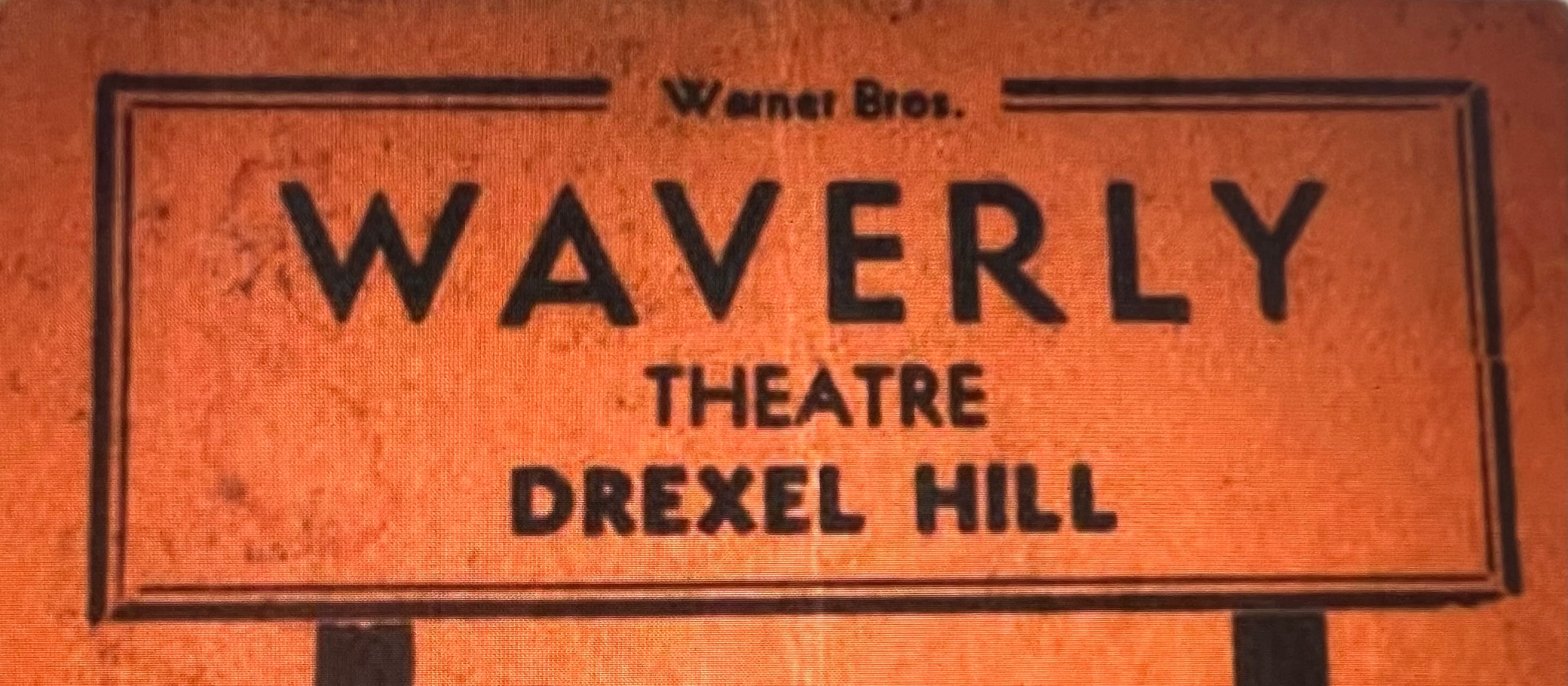
We all went to see the Beatles movie A Hard Day’s Night when it came to The Waverly, a theater that served as the local movie house but was too far, as I recall, to walk to. This was quite a scene, with a line that stretched around the block and then the girls screaming hysterically when we all finally got in to see the flick.
We saw other movies at The Waverly and I can remember a black and white version of Dracula that had Tim so scared he crawled under his seat and refused to look at the screen while I derided him as a scaredy pants. That was, until the scene where they pounded the stake into the vampire’s heart and every time they struck the spike, there was a close-up shot of black blood like thick paint gushing. I even got queasy then.
When fourth grade finally came to an end and summer arrived, I learned to play half-ball and stick ball. Half-ball was a quintessential urban game. You cut a hollow rubber ball in half so when hit the ‘half ball’ didn’t travel too far and when it struck nearby buildings it didn’t do any damage. Using a broom stick for a bat, you stood facing the back of the row house. The ball was pitched to you kind of like a Frisbee is tossed and you whacked it. If it hit the garage door it was a single. The first floor above the garage was a double, the second floor was a triple. A “roofer” was a homer and the rooftops of the row houses were littered with half balls.
That summer there also were stick ball games played almost every day in the street with the kids in the neighborhood choosing up sides, which was always a popularity contest. Disputes during these games were settled in a spirit of fairness and good sportsmanship.
Oh yeah! Well why don’t you try and make me go back to first base?
It got pretty hot during the summer and many families went “down the shore” - the Jersey Shore - for a summer vacation at the beach. We went to Atlantic City for one night one time and my dad swung by Cape May where he had been stationed in the Coast Guard. My brother Brendan at one point disappeared into the crowd on the Boardwalk, causing several long minutes of high anxiety before he was located.
There was no public pool in this neighborhood only a private pool for members only. It wasn’t exclusive really but it cost more money to join than my parents wanted to pay so no pool for us. A couple times a summer they would open it to the public and for 50 cents or something you could swim all day and buy burgers and fries from the concession. It was a big pool swarming with kids and those pool days were a highlight of the summer. I can remember staring forlornly though the fence on a hot day when it was open for members only. Sweating.
The neighborhood was pretty much an urban-setting, but there was a creek, straddled by a narrow strip of woodlands, that ran through a portion of the neighborhood. There were minnows in the creek and the occasional turtle, but for the most part the wildlife consisted of large rats who had followed the human residents from city to suburb. This creek passed beneath the bridge beside the school, and there were trails through the trees that provided solace in nature on the walk home from school.
One summer afternoon I had a nasty encounter with hornets nesting in a tree in these woods. I had been stung before by a hornet, in Washington, when I slammed a door exiting the house and the startled hornet dive bombed me. Now I was older but stupider. I joined a gaggle of kids throwing rocks at the hornets’ nest. I saw the shadow of a big, really pissed off hornet, just before it drilled me on the forehead. I shrieked and ran for home. The next day I woke up and my eyes were slits from the swelling. The other kids saw me and said in their enlightened way: Look at Murph - he’s a (derisive term for Asian)!
The hornet attack took place in summer, so it didn’t result in any time out of class. There were a couple of times when I stayed home sick with mom, who had become addicted to several daytime soap operas on the TV. I would lie incapacitated on the couch as my mom explained to me which doctor was having an affair with which nurse, as if I understood what she was talking about. By the time we got through an afternoon of As the World Turns and Days of Our Lives and whatever else she watched I was ready to go back to school, sick or not.
I spent a fair amount of time wandering beside the creek, attempting to catch minnows and other specimens of wildlife, such as the occasional toad, that managed to survive in the vicinity. My dad was no fisherman and there certainly were no trout in this stream. But in some local tributary I had my first experience with bait and hook. There were crayfish that couldn’t resist the little piece of Wonder Bread attached to a string. The little crustaceans would clutch the bread with a claw and hold on while being pulled from the typically stagnant creek, some refusing to let go and ending up captured.
More elusive were what we called sunfish, smallish fish with spiny fins, likely invasive, that would aggressively steal the balled up bread attached to a small hook. Perhaps my finest moment as a young fisherman took place when I realized I could replace the sodden easily snatched bread with a piece of discarded cigarette filter. The fibrous synthetic plastic basically non-biodegradable filters wouldn’t disintegrate on the hook and, after some molding, they looked to the fish like a piece of easily digested bread. Sure enough, when a frustrated fish attempted to snatch this different kind of “bread” that didn’t simply melt upon contact it ended swallowing the hook. Unsure what to do with the little fish after catching several using this technique, I tossed them back into the water, where the crayfish were more than willing to eat one for lunch (if the fish didn’t eat them).
I discovered an ad in a comic book advertising reptiles for sale by mail and after pestering my mom about ordering a snake or two, she reluctantly agreed to a compromise where I could order only lizards. I eagerly sent off my $1.25 for five anoles and within three weeks the anoles came by US Mail in a recycled metal can filled with some kind of moss and with a remnant of nylon stocking stretched over one end so the poor creatures could breath. The mailman seemed relieved to be handing the package - marked Live Animals - over to me and asked if I was planning to order anything else that was alive. He was even more relieved when I told him my mom wouldn’t let me order any snakes.
I obtained a large fish bowl and turned it into a terrarium for my new pets, complete with sand and plants. I caught flies and small moths in jars, and amused myself to no end watching the lizards stalk, attack and devour the bugs when I dropped them through a hole in the screen that secured the top of their glass cage. I carefully provided the small amount of water the reptiles needed to survive by placing a few drops on the leaves of the plants in the cage. Eventually I constructed a larger terrarium from an old 20-gallon fish tank and expanded my live collection to include small toads that I caught in the yard.
I decided I wanted to be a zoologist when I grew up. My dad encouraged me with assurances that there was little or no opportunity in this field and no money to be made in it even if you could find work. Also, I would have to be good in science, which I wasn’t, and besides, what kind of geek collects lizards and that kind of stuff anyway?
My dad was right about one thing, success in a scientific field required an ability in math and science, two subjects for which I didn’t have a natural affinity and also two subjects that very few of the good sisters at Fatima knew anything about and therefore were not in the position to teach their charges much about either. Public school kids had labs with test tubes and microscopes and such. We had science for 20 minutes or so maybe two or three times a week, when it was likely that Sister so and so would spend more time explaining how Noah took two of every kind of animal onto the ark than she would talking about how amoebas reproduce.
This is not to say that the good sisters failed to impart knowledge. When I later attended public high school, the guidance counselor there seemed very impressed by my transcripts from Fatima. Parochial schools in general had a good reputation for achieving impressive academic results on tight budgets (it helped that nuns basically worked for free). The high school guidance counselor got at little bit carried away and ended up putting me in a math class I really wasn’t prepared for. I knew he was being duped when he noted with approval that I had credits for art class. I flashed back to art class at Fatima. Maybe 15 minutes on a Friday afternoon using a raggedy old booklet featuring paintings of angels and the virgin Mary holding the baby Jesus, with an accompanying lecture from the nun about the godless evil that was modern art.
My dad’s job at the Inquirer seemed to be going well but it wasn’t everything he expected and certainly not everything he had hoped for. Anyway, he took to drinking more. I was getting old enough to be more aware when he was on a binge and if I wasn’t, my mother would let me know.
My mom didn’t get much in the way of adult companionship. She still didn’t drive and so couldn’t get to the store or anywhere which also met that I was dispatched to Wynn’s Market almost every day to fetch milk and other groceries. She learned not to send my brother Tim because he wouldn’t buy what she instructed him to, only what he wanted. Oh, they were out of lettuce mom, they only had marshmallows.
My mom did talk to the other wives in the neighborhood. She was a championship gabber, as verbalizing apparently was the major pastime in her hometown of Peoria. But since my dad never really socialized with anybody anymore, it was difficult for her to make friends. Because I was the oldest, she would sometimes dump on me when stressed out about things, like the old man being on the bottle.
What really bothered me about my dad’s drinking was that it upset my mother. Later in life I realized he had an addiction problem, and he wasn’t the only one in his family who struggled with drinking. At one point I thought that had my mother maybe been a little more tolerant and less of a teetotaler herself, maybe, and this is admittedly a big maybe, dad would have stayed home and had a couple of beers and that would have been it. Instead, he drank in taverns and I think that the longer he lingered at the bar, the more he realized he was in for a dose of the sulks and cold shoulder from my mom, and he would have to drink more to face it, since my mom was capable of giving him the frigid silent treatment for days at a time.
One night after I was already in bed, I heard a commotion downstairs. Soon my mother was shouting for me. I ran down the stairs in my pajamas and saw the old man, still in his work clothes, sprawled semiconscious on the couch. He had been too bombed to drive and one of his drinking cohorts had brought him to the door, deposited him on the couch and I’m sure quickly retreated when he saw the unhappy expression on my mother’s face.
She shouted at me. Look at your father! Just look at him!
My poor old man was so incapacitated he could barely move, but I could tell he knew I was there and he knew what my mother was doing and he was mortified. My mother in turn was so desperate that she was deliberately trying to embarrass him in front of his oldest son in hopes that maybe this would bring him to his senses about his problem.
I just wanted to get the hell out of the room and I retreated back up the stairs, with my mother still making a scene downstairs. This experience was such a bummer for me that I took to praying that my dad wouldn’t drink. I was still pretty religious and thought that God might intervene here. One evening, when my I knew my dad was on a bender, I was on the street avoiding having to go home. I told God that if he would make the old man be sober tonight, I would crawl on my knees the last block to my house. So that’s what I did, I crawled to the house, but when I got inside my mom was tense and my dad was nowhere in sight so I guessed that the Lord hadn’t heard me or seen me on my knees.
Coming Soon: Part IV Sister Sociopath, Scouts and Snakes
Read now at galoshes.blog
Subscribe for free!